


What is Alyssa’s Law?
In life-threatening school emergencies, every second counts. A delayed response can mean the difference between life and death, something Alyssa’s Law creators unfortunately know all too well.
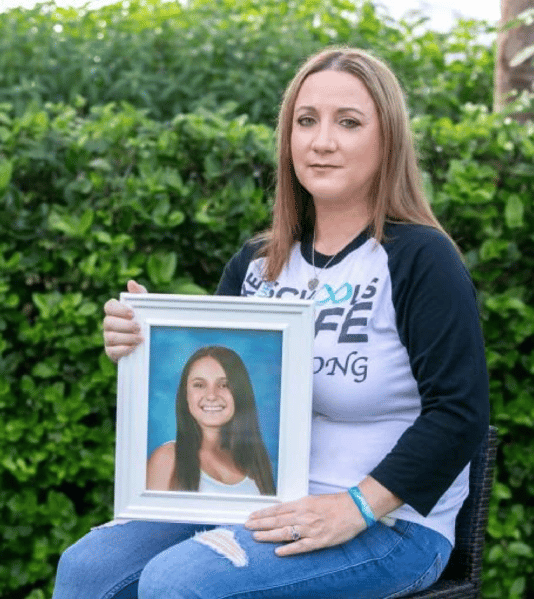
The bill was created and named in honor of Alyssa Alhadeff, a 14-year-old student who tragically lost her life in the 2018 mass shooting at Marjory Stoneman Douglas High School in Parkland, Florida. Determined to turn their grief into action, Alyssa’s parents, particularly her mother, Lori Alhadeff, became strong advocates for school safety improvements, collaborating with lawmakers to draft Alyssa’s Law.
Through Alyssa’s Law, they hope to significantly reduce law enforcement response times to life-threatening incidents, improving outcomes and preventing other families from experiencing a similar tragedy.
Standard Alyssa’s Law Requirements
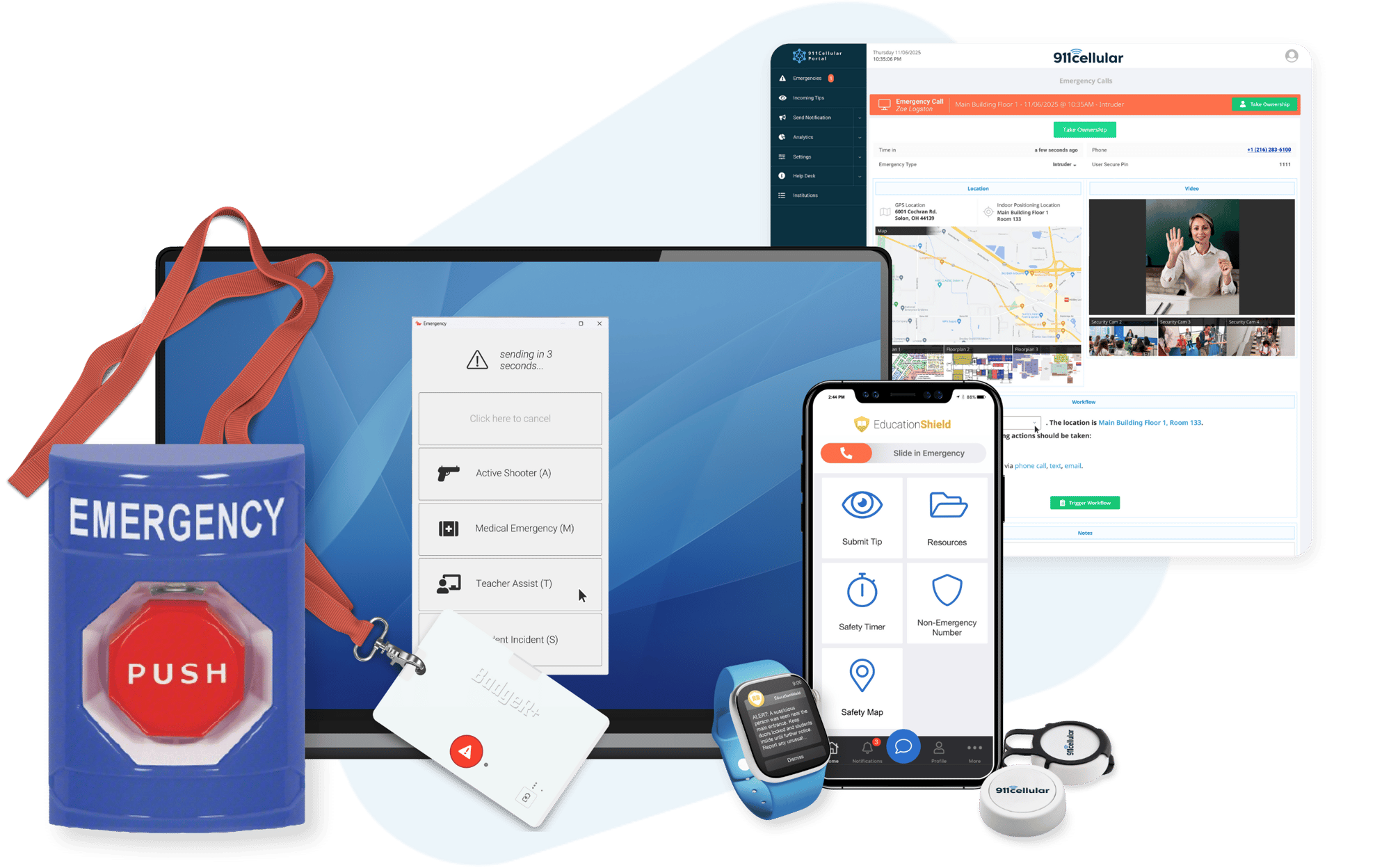
Panic Buttons Solution
Must be able to silently and discreetly activate the panic button.

Notify Law Enforcement
Panic activations must notify law enforcement officials directly.

Notify Staff and Students
Panic activations must activate emergency communication systems.

Alyssa's Law Legislative Action Across the Nation
Even if your state hasn’t passed Alyssa’s Law yet, implementing it as part of your school’s safety plan is a proactive step toward stronger emergency response. States like Oregon, Georgia and Massachusetts have been working toward passing this legislation for years and more states are quickly following suit.
Alyssa’s Law ensures a rapid, technology-driven response to emergencies—saving lives when every second counts. By integrating this requirement into your safety strategy now, your school demonstrates a commitment to protecting students and staff while staying ahead of evolving state regulations.
Alyssa’s Law Compliance by State
Alabama
Alyssa's Law in Alabama
• Alternative Names: HB 234
• Introduction Date: Introduced on February 6th, 2025. Passed the House on March 20th, 2025.
• Sponsor: Rep. Alan Baker (R, District 66)
• Requirements: Would require mobile emergency rapid response systems for public K-12 schools, enacted by October 1st, 2030. Each school must provide staff with a mobile emergency rapid response system connecting to school emergency services and local public safety. The State Board of Education will develop a list of approved vendors.
• Funding: the K-12 Capital Grant Program, the Education Trust Fund Advancement and Technology Fund, the School Security and Fire Safety Fund, or any other available or funding sources.
Arkansas
Alyssa's Law in Arkansas
• Alternative Names: HB 1492
• Introduction Date: February 17th, 2025
• Sponsor: Rep. Zach Gramlich (R, District 50)
• Requirements: Each public school district and open-enrollment public charter school to provide all school employees with a wearable panic alert system device and have all staff trained on protocol/usage before the 1st day of school.
• Funding: Districts would be responsible for the device cost and training.
Florida
Alyssa's Law in Florida
• Alternative Names: SB70
• Enacted: July 1st, 2020
• Sponsor: Sen. Lori Berman (D, district 26), Sen. Linda Stewart (D, district 47), and Sen. Vic Torres (D, district 25)
• Requirements: All public and charter schools must implement a mobile panic alert system called “Alyssa’s Alert.”
• Compliance Deadline: 2021-2022 school year
• Funding: The state’s Department of Education provides a list of 5 approved vendors. Florida also allocated $6.4 million in recurring funding to secure panic alert systems for all state schools.
Georgia
Alyssa's Law in Georgia
• Alternative Names: SB17 “Ricky and Alyssa’s Law”
• Introduction Date: Introduced on January 16th, 2025, passed both the GA House and Senate, headed to the governor’s desk to sign.
• Sponsor: Sen. Jason Anavitarte (R-Dallas)
• Requirements: All GA public schools to install mobile panic alarm systems directly linked to emergency responders and state/local law enforcement. The bill also mandates that each local school system procure mapping data for each public and private school within its boundaries.
• Funding: No funding information currently included in the bill.
Kentucky
Alyssa's Law in Kentucky
• Alternative Names: HB14 “Alyssa’s Law”
• Introduction Date: February 7th, 2025. Passed the House of Representatives on March 6th, 2025, and is now with the state senate.
• Sponsor: Rep. Kevin Jackson (R), Rep. George Brown (D) and others.
• Requirements: Allows school districts to implement a wearable panic alert system, requires the state Department of Education to provide a list of approved wearable panic alert systems, requires the Center for School Safety to establish the Wearable Panic Alert Grant Program.
• Funding: The Wearable Panic Alert Grant Program will provide a 50% match to school districts for implementing a wearable panic alert system, or for maintenance costs associated with the system if funds are available.
Massachusetts
Alyssa's Law in Massachusetts
• Alternative Names: HB554
• Introduction Date: February 16th, 2023
• Sponsor: Rep. Edward Philips (D, 8th District)
• Requirements: A silent panic alarm system for all public elementary and secondary schools. Each school must be equipped with at least one panic alarm that can contact local law enforcement and will need to be silent.
• Funding: The Massachusetts School Building Authority will be responsible for funding the full cost of the panic systems, and schools that have previously implemented systems may receive reimbursements.
Michigan
Alyssa's Law in Michigan
• Alternative Names: SB 76
• Introduction Date: February 11th, 2025
• Sponsor: Sen. Michael Webber (R, District 9)
• Requirements: All public and private schools to implement mobile panic button systems that can connect to local/state law enforcement, school faculty/staff, and 1st responder agencies.
• Funding: Sen. John Damoose (R, District 107) introduced SB 77 along with SB 76, which would amend the state school aid budget to provide funding for mobile panic alert systems.
Montana
Alyssa's Law in Montana
• Alternative Names: LC 1521
• Introduction Date: November 16th, 2024
• Sponsor: Rep. Braxton Mitchell (R, District 5).
• Requirements: A mobile panic alert system for each school district to integrate with local public safety to transmit 911 calls and mobile activations. Each district will need to provide training to staff before the beginning of each school year.
• Funding: The bill allows school districts to transfer state or local revenue to their building reserve fund for safety improvements, including the installation of emergency response systems.
New Jersey
Alyssa's Law in New Jersey
• Alternative Names: Alyssa’s Law (A764)
• Enacted: February 6th, 2019
• Sponsor: Reps Ralph Caputo (D), Cleopatra Tucker (D), Annette Quijano (D), and Valerie Huttle (D), among others.
• Requirements: Bill requires public school buildings to be equipped with panic alarms linked to local law enforcement.
• Compliance Deadline: December 21st, 2020
• Funding: Schools can receive a security grant under the Bond Act.
New York
Alyssa's Law in New York
• Alternative Names: SB S7132B
• Enacted: June 23rd, 2022
• Sponsor: Elijah Reichlin-Melnick (D)
• Requirements: Bill does not require silent panic alarms, rather, it requires district-wide school safety teams to consider wired or wireless panic buttons, or mobile or computer applications as part of their district-wide safety plan reviews.
• Compliance Deadline: June 23rd, 2022
• Funding: Schools that move forward with silent panic alarm systems may utilize funding secured through The Smart Schools Bond Act to help finance the procurement of devices.
Ohio
Alyssa's Law in Ohio
• Alternative Names: SB 313
• Introduction Date: September 10th, 2024
• Sponsor: Sen. Michele Reynolds (R, District 3)
• Requirements: Wearable panic alert systems to be provided at each school facility (each district building and chartered nonpublic school). Before the 1st day of school each year, all school facility personnel will need to receive training on protocol/appropriate use for the panic buttons.
• Funding: The director of Budget and Management will establish accounts indicating the source and amount of funds for each bill requirement.
Oklahoma
Alyssa's Law in Oklahoma
• Alternative Names: HB4073
• Enacted: July 1st, 2024
• Sponsor: Reps Kevin Wallace and John Waldron (R, D) and Sen. Darrell Weaver and Bill Coleman (D, R)
• Requirements: Schools must select a mobile panic alert system that provides real-time coordination between first responder agencies, school personnel, and law enforcement and integrates with existing 911 infrastructure.
• Compliance Deadline: The start of the 2024-2025 school year
• Funding: The state’s Department of Education will continue funding ongoing panic button contracts through June 30th, 2025. Schools may also use the Safety Revolving Fund to procure mobile panic alert systems.
Oregon
Alyssa's Law in Oregon
• Alternative Names: HB3101
• Introduction Date: Introduced on January 24th, 2023, passed the House in March of 2025
• Sponsor: Rep. Emerson Levy (D, district 53) and Rep. Courtney Neron (D, district 26)
• Requirements: Schools must have a panic alarm system in each school building and that schools have wireless panic alert devices in each classroom of each building (exceptions to this include schools that choose to use a hard-wired device or a mixture of wireless/hard-wired devices, as long as each classroom has a device, if the school is public and purchase/maintenance would cause financial hardship, or if the school is private).
• Funding: The bill provides schools with $2.5 million to install panic alarm systems.
South Carolina
Alyssa's Law in South Carolina
• Alternative Names: H3258
• Introduction Date: Introduced on January 14th, 2025, unanimously passed the House in April of 2025
• Sponsor: Reps Thomas Pope (R, District 47), Doug Gilliam (R, District 42), David Martin (R, District 26), and Hamilton Grant (D, District 79)
• Requirements: Each public school district and charter school in the state must acquire and implement a mobile panic alert system.
• Funding: No funding information is included in the bill.
Tennessee
Alyssa's Law in Tennessee
• Alternative Names: SB0724 (HB0322)
• Enacted: May 10th, 2024
• Sponsor: Rep William Lamberth and others.
• Requirements: Schools are not required to utilize silent panic alarms, but each district-wide and building-level school safety team must consider a mobile panic alert system when evaluating and revising their safety plans.
• Compliance Deadline: May 10th, 2024
• Funding: The state legislature established the School Safety Alert Grant Pilot Program, which provides schools with a grant to purchase mobile panic systems. The grant allows up to $8,000 per school in funding per fiscal year with a cap of $48,000.
Texas
Alyssa's Law in Texas
• Alternative Names: HB669 (SB838)
• Enacted: May 5th, 2023
• Sponsor: Rep. Shawn Thierry (D) and others.
• Requirements: All Texas school districts and open-enrollment charter schools must equip every classroom with silent panic alert technology capable of immediately contacting emergency services.
• Compliance Deadline: The 2025-2026 school year
• Funding: Schools can use safety allotment funds and follow their usual procurement process.
Utah
Alyssa's Law in Utah
• Alternative Names: HB0084
• Enacted: March 12th, 2024
• Sponsor: Rep. Ryan Wilcox (R, district 7) and Sen. Don Ipson (R, district 29)
• Requirements: All LEAs must provide every classroom staff member with a wearable panic alert device that allows for immediate contact with emergency services and provide training before the start of the school year. LEAs must also ensure that all security cameras in school buildings are accessible to local law enforcement and work with them to set up access protocols.
• Compliance Deadline: May 1st, 2024
• Funding: The state has outlined funding allocations in the schools’ regular operating and capital budgets.
Washington
Alyssa's Law in Washington
• Alternative Names: SB 5004
• Introduction Date: Introduced on December 2nd, 2024, passed both the House and Senate, headed to the governor’s desk to sign as of April 23rd, 2025.
• Sponsor: Nikki Torres (R, district 15)
• Requirements: School districts are required to work with law enforcement to develop an emergency response system to expedite the response/arrival of law enforcement during an emergency.
• Funding: This is no mention of funding in the current draft of the bill.
West Virginia
Alyssa's Law in West Virginia
• Alternative Names: SB434
• Introduction Date: February 13th, 2025
• Sponsor: Sen. Amy Grady (R, 4th district)
• Requirements: Each public school building must be equipped with at least one panic alarm for use in a school security emergency. The panic button must be linked to local law enforcement agencies and immediately transmit a signal/message to authorities.
• Alternative Names: HB2394
• Introduction Date: February 14th, 2025
• Sponsor: Reps Jonathan Pinson (R, District 017), Adam Burkhammer (R, District 064), and Bryan Smith (R, District 073) on 2.14.25 and is currently with the House Education Committee
• Requirements: This bill is similar to SB434 - however, it focuses on implementing a wearable panic alert system at every school in the state. Each system must integrate with local public safety, transmit 911 calls/mobile activations, and initiate a campus-wide lockdown notification. Each staff member would be required to receive a wearable panic alert device and would need to receive training on protocol/usage before the first day of school each year.
• Funding: This is no mention of funding in the current draft of the bill.
Related Federal Legislation
Alyssa Act
First introduced by Representative Josh Gottheimer (D-N.J.) in 2019, the ALYSSA Act continues its journey through the U.S. House of Representatives. The act mandates and funds silent panic alarms for all schools across the U.S. There has been no movement since July 27, 2023, when it was referred to the House Committee on Education and the Workforce.
Safer Schools Act
The Safer Schools Act (H.R.2618) was first introduced by Representative Roger Williams (R-TX) in 2023. H.R.3618 aims to create a grant program to help public schools conduct independent facility security risk assessments and implement hard security improvements - prioritizing schools that have experienced violent incidents. This bill has not made any progress since April 24, 2023, when it was referred to the Subcommittee on Economic Opportunity.
Federal Funding Opportunities
There are several federal funding opportunities for school safety initiative. Some of the initiatives include:
Alyssa’s Law Compliant Security Solutions
Keyboard Panic Button
Easily send emergency alerts from your computer.
Learn more >Wearable Panic Button
A reliable solution you can discreetly carry at all times.
Learn more >Wall Mounted Panic Button
A stationary, wireless, easily accessible solution.
Learn more >Mobile Safety App
A versatile alerting tool with additional safety resources.
Learn more >Mass Notification System
Deliver timely, targeted emergency notifications.
Learn more >Spark - Alert Relay
Automatically initiate lockdown protocols upon panic activation.
Learn more >Get Compliant with 911Cellular
Our Experts Can Help!
911Cellular offers top-rated panic alarm solutions for Alyssa’s Law compliance, featuring customizable activation and 2-way communication to ensure rapid emergency response.
Recognized as the #1 panic alarm solution by the Florida Department of Education’s Selection Committee, we provide the most trusted technology for school safety.
Connect with our experts to learn more!
Related Articles
Georgia Signs “Ricky and Alyssa’s Law”: What It Means for School Safety
On April 28th, 2025, Georgia Governor Brian Kemp signed Senate Bill 268, known as “Ricky and...
Washington State Legislature Unanimously Passes Alyssa's Law
The Washington State House of Representatives unanimously passed Alyssa’s Law, formally known as SB...
Kentucky’s HB14: Strengthening School Safety with Wearable Panic Alert Systems
School safety is a top priority, and Kentucky is taking action to enhance school emergency response...
The Role of School Mapping Data in Emergency Response
In an emergency situation, every second counts. First responders need accurate, up-to-date...
Georgia Takes a Stand for School Safety with Senate Bill 17
On March 6th, the Georgia Senate unanimously passed Senate Bill 17, also known as “Ricky and...
Maximizing Safety on a Budget: The Value of a Scalable Staff Duress System
When it comes to protecting employees, there is no room for compromise. However, many organizations...